




























2026 Toyota Corolla Cross Hybrid Trims Explained – S, SE or XSE: Which One Should You Buy?
The 2026 Toyota Corolla Cross Hybrid comes in three trims — S, SE, and XSE. Same engine, same AWD, same fuel economy. So what separates them? Here's the complete buying guide.
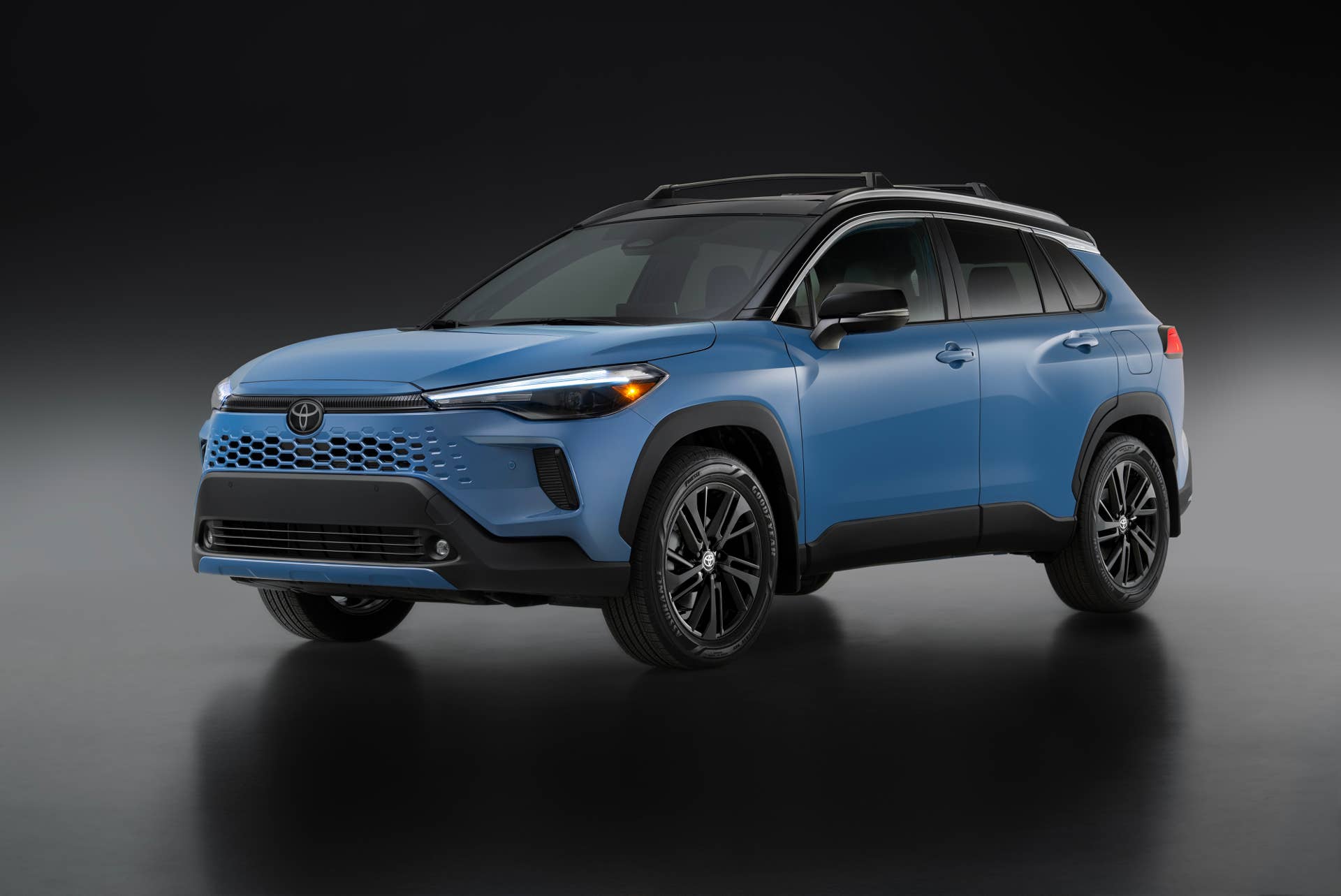
Here is something Toyota does not advertise loudly: all three trims of the 2026 Corolla Cross Hybrid — S, SE, and XSE — share the exact same powertrain, the exact same fuel economy, and the exact same standard all-wheel drive system. The engine does not improve as you move up. The efficiency does not change. What you are actually paying for when you step from the S to the SE to the XSE is comfort, technology, and the feeling of sitting in a better-equipped car every single day.
That framing changes how you should think about the trim decision entirely.
The Powertrain: Same Across All Three Trims
Every 2026 Corolla Cross Hybrid is powered by a 2.0-litre hybrid system producing 196 combined horsepower, driving all four wheels through an Electronic On-Demand AWD system. There are no hybrid-specific powertrain upgrades at higher trim levels — the S and the XSE move identically.
Fuel economy is equally uniform. The 2026 Corolla Cross Hybrid returns Toyota-estimated fuel economy of 46 miles per gallon in city driving, 39 on the highway, and 42 combined — strong numbers for a subcompact SUV, particularly the city figure which benefits from hybrid energy recovery during braking.
For comparison: the non-hybrid Corolla Cross is rated at just 30 mpg combined — meaning the hybrid system delivers a 40 percent efficiency improvement regardless of which trim you choose.
Powertrain Summary
| Spec | All Trims (S / SE / XSE) |
|---|---|
| Engine | 2.0-litre 4-cylinder hybrid |
| Combined Power | 196 horsepower |
| Drivetrain | Electronic On-Demand AWD (standard) |
| Fuel Economy (City) | 46 mpg |
| Fuel Economy (Highway) | 39 mpg |
| Fuel Economy (Combined) | 42 mpg |
| Transmission | CVT |
The Pricing: How Far Apart Are They Really?
Pricing for the 2026 Corolla Cross Hybrid starts at $28,995 for the S. The SE comes in at $30,315 — a $1,320 step up. The top XSE sits at $33,030, which is $2,715 above the SE and $4,035 above the base S.
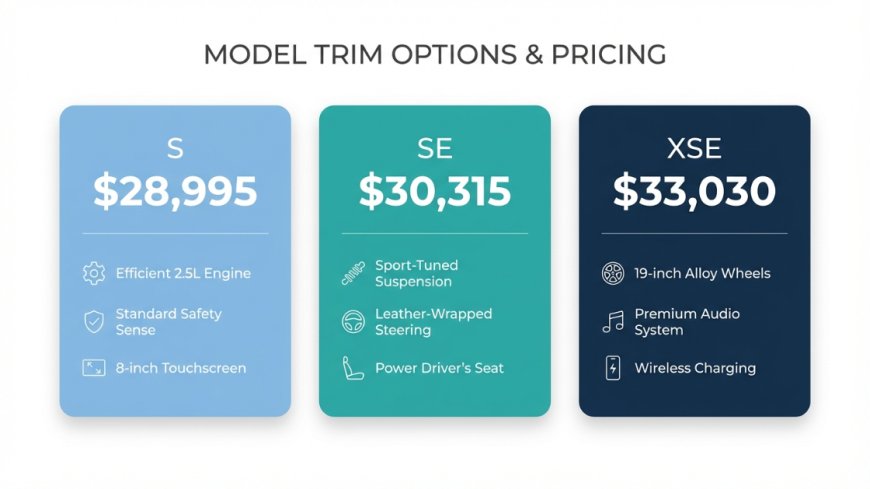
The gap between adjacent trims — roughly $1,300 to $1,900 — is modest enough that moving up a level for specific features is a realistic option for most buyers.
| Trim | Starting Price (USD) | Premium Over S |
|---|---|---|
| Hybrid S | $28,995 | — |
| Hybrid SE | $30,315 | +$1,320 |
| Hybrid XSE | $33,030 | +$4,035 |
Note: destination and delivery charges of approximately $1,350 apply to all trims and are not included in the above figures.
The Hybrid S: More Than a Base Model
The word "base" tends to make buyers nervous — it conjures images of plastic wheel covers and stripped-out cabins. The 2026 Corolla Cross Hybrid S is not that kind of base model.
The S trim delivers 17-inch alloy wheels, LED headlights, a height-adjustable driver's seat, push-button start with smart key, automatic climate control, and an 8-inch touchscreen with wireless Apple CarPlay and Android Auto.
All Corolla Cross Hybrid models also come with Toyota Safety Sense 3.0 as standard — a suite that includes forward collision warning with pedestrian detection, adaptive cruise control with full-speed range capability, lane departure alert with steering assist, and automatic high-beam headlights. The base S also comes with a 7-inch digital gauge cluster — a feature that was previously optional but became standard across all trims for 2026. The dash now looks legitimately modern rather than entry-level.
What the S does not have is equally important to note: no blind spot monitoring, no wireless phone charging, no paddle shifters, and the smaller 8-inch infotainment screen throughout. For drivers who spend significant time in traffic or parking in tight spaces, these omissions are genuinely felt in daily use.
Best for: Buyers who want the hybrid drivetrain and AWD at the lowest entry price, and whose daily driving does not involve much highway lane-changing or urban parking manoeuvring.
The Hybrid SE: The Sweet Spot
Stepping up to the SE at $30,315 adds paddle shifters, wireless device charging, and several interior upgrades over the S.
The additions are more meaningful than the $1,320 price gap might suggest. The SE builds on the S with blind spot monitoring — integrated into gloss-black heated power mirrors that also include turn signal indicators — a leather-trimmed steering wheel, and rear cross-traffic alert.
SE and XSE buyers also get an additional pair of USB-C ports for rear-seat passengers, compared to the two front-only ports on the S. For families with children or passengers who charge devices regularly, this is a practical daily-use upgrade.
The 10.5-inch infotainment touchscreen is available on the SE — though it is optional rather than standard at this trim level, appearing as part of a package upgrade. It becomes standard equipment on the XSE.
Best for: Buyers who want blind spot monitoring and wireless charging as daily essentials and find the $1,320 over the S justifiable — which it almost certainly is.
The Hybrid XSE: The Trim That Changes the Experience
The XSE sits at the top of the lineup and adds upscale materials and advanced technology that give the small SUV a noticeably more premium feel. UniversityGuru
The differences are not cosmetic details — they are the features that determine how the car feels to live with day after day.
The XSE adds a 12.3-inch digital instrument panel, a 10.5-inch touchscreen display as standard, dual-zone climate control, and heated front seats. The exterior gets 18-inch black alloy wheels and modern LED daytime running lights that visually distinguish the XSE from lower trims. Inside, SofTex synthetic leather upholstery replaces the cloth seating of the S and SE, and a heated steering wheel and ambient lighting complete a cabin that feels several categories above the base trim.
The XSE also adds parking sensors front and rear with automatic emergency braking — a safety feature not available on the S or SE.
Optional on the XSE: a power liftgate (only available on this trim), a moonroof, and a nine-speaker JBL premium audio system. If you want any of these three features, you must choose the XSE — they are simply not offered on the S or SE.
Full Feature Comparison: S vs SE vs XSE
| Feature | Hybrid S | Hybrid SE | Hybrid XSE |
|---|---|---|---|
| Starting Price | $28,995 | $30,315 | $33,030 |
| Powertrain | 196hp Hybrid AWD | 196hp Hybrid AWD | 196hp Hybrid AWD |
| Fuel Economy | 46/39/42 mpg | 46/39/42 mpg | 46/39/42 mpg |
| Infotainment Screen | 8-inch | 8-inch (10.5 optional) | 10.5-inch standard |
| Digital Gauge Cluster | 7-inch | 7-inch | 12.3-inch |
| Toyota Safety Sense 3.0 | ✅ Standard | ✅ Standard | ✅ Standard |
| Blind Spot Monitoring | ❌ | ✅ | ✅ |
| Wireless Phone Charging | ❌ | ✅ | ✅ |
| Paddle Shifters | ❌ | ✅ | ✅ |
| Heated Front Seats | ❌ | ❌ | ✅ |
| Heated Steering Wheel | ❌ | ❌ | ✅ |
| Dual-Zone Climate Control | ❌ | ❌ | ✅ |
| SofTex Upholstery | ❌ | ❌ | ✅ |
| 18-inch Black Alloy Wheels | ❌ | ❌ | ✅ |
| Ambient Interior Lighting | ❌ | ❌ | ✅ |
| Parking Sensors (Front/Rear) | ❌ | ❌ | ✅ |
| Power Liftgate (optional) | ❌ | ❌ | ✅ |
| Moonroof (optional) | ❌ | ❌ | ✅ |
| JBL 9-Speaker Audio (optional) | ❌ | ❌ | ✅ |
| Rear USB-C Ports | ❌ | ✅ | ✅ |
The Verdict: Which Trim Is the Smart Buy?
Although recommending the top trim for every buyer is unusual, in this case the Hybrid XSE is the model most likely to satisfy the widest range of buyers. It delivers the ideal mix of efficiency, safety, comfort, and convenience without pushing the price into the territory of larger hybrid SUVs.
The reasoning is straightforward: over the life of a typical loan term, the $4,035 price difference between the XSE and the base S becomes a small monthly payment gap — while the features added at the top trim are not luxury indulgences but practical daily improvements that buyers genuinely miss when they are absent.
Heated seats in winter. A larger instrument cluster you read at a glance. Dual-zone climate control so driver and passenger set their own temperatures. Blind spot monitoring in traffic. Parking sensors in tight spaces. These features are not amenities — they are usability improvements that affect every single drive.
That said, the SE makes a compelling case for buyers on a tighter budget. Blind spot monitoring and wireless charging alone justify the $1,320 premium over the S — and the SE will satisfy most buyers who are not going to miss heated seats or the larger screens.
The S makes sense only if the hybrid drivetrain and AWD at the lowest possible price point is the primary objective — and the buyer is genuinely indifferent to everything added above it.
A Note for Pakistani Buyers
The 2026 Corolla Cross Hybrid is not yet officially available in the Pakistani market through authorised Toyota dealers. Pakistan's Indus Motor Company currently offers earlier Corolla Cross configurations, and the 2026 hybrid variant with updated features has not been confirmed for local launch at the time of writing.
However, grey market imports of newer Toyota configurations do reach Pakistan — typically at significant premiums above the US MSRP after import duties, freight, and local taxes. Pakistani buyers tracking the Corolla Cross Hybrid for a potential import should note that the XSE's features — particularly the 12.3-inch cluster, SofTex seating, and JBL audio — represent the most complete version of the car and the one most worth the additional cost if importing.
For official launch news and local pricing updates for the Corolla Cross Hybrid in Pakistan, monitor Indus Motor Company's official announcements.
The Bottom Line
The 2026 Toyota Corolla Cross Hybrid is a well-engineered, efficiently priced subcompact SUV that makes the hybrid purchase decision easy — the efficiency advantage over the non-hybrid is substantial at 42 versus 30 combined mpg, and the AWD is standard across all trims.
The trim decision is harder only on paper. In practice, the XSE justifies its premium through features that matter in daily use rather than features designed to impress in a showroom. The SE is the practical minimum for buyers who drive in traffic regularly. The S is the right choice only for buyers whose budget truly makes the $4,000 gap to the XSE a meaningful consideration.
For everyone else: the XSE is the one to get.
Author Bio — Haris Zafar: Haris Zafar is an automotive writer covering new car launches, trim-level analysis, and the Pakistani car market for etech.pk. He specialises in helping Pakistani buyers make sense of international car specifications and their local market relevance. Connect: linkedin.com/in/hariszafar-auto.
What's Your Reaction?
 Like
0
Like
0
 Dislike
0
Dislike
0
 Love
0
Love
0
 Funny
0
Funny
0
 Angry
0
Angry
0
 Sad
0
Sad
0
 Wow
0
Wow
0