


















How to Apply for Study Abroad from Pakistan 2026 – Step-by-Step Timeline & Checklist
Complete step-by-step guide to studying abroad from Pakistan in 2026 — IELTS prep, SOP writing, admission deadlines, visa checklist and scholarship tips

Every year, thousands of Pakistani students with strong grades and genuine ambition fail to secure a study abroad place — not because they weren't eligible, but because they started the process four months too late. The average successful applicant to a European or Canadian university begins their study abroad application process 12 to 18 months before their intended start date. Most Pakistani students start 4 to 6 months out. That gap explains more rejections than any GPA or IELTS score.
This is a complete, step-by-step guide to the study abroad application process from Pakistan in 2026 — built for students who are just starting out and don't yet know what they don't know. If you're an intermediate student planning to go abroad for a bachelor's, or a fresh graduate targeting a master's programme, this timeline and checklist is your starting point.
The Complete Study Abroad Timeline: Month by Month
The timeline below is built for a September 2026 or January 2027 intake — the two most common international intake windows. If you're reading this in March 2026 and want September 2026, you're in crunch mode but not out of options. If you're targeting January 2027 or September 2027, you're in an ideal position to do this properly.
Choose Your Destination & Degree Level
Before you research universities, decide on two things: which country and which level (bachelor's vs master's). These decisions shape everything — visa type, English test requirement, scholarship eligibility, and how long the process takes.
The country decision should be driven by three factors in order: field of study strength, total cost (tuition + living), and post-study work rights. Destination choice based primarily on which country "feels exciting" is the single most common mistake Pakistani students make at this stage.
Quick country guide for 2026 applicants:
- Germany — Free/low tuition, strong engineering, requires German for most undergrad programmes
- Turkey — Affordable, full scholarships available (Türkiye Bursları), English-taught options at top unis
- Canada — High cost but strong PGWP, excellent for master's students
- UK — 1-year master's (saves money vs 2-year), Graduate Route visa post-study
- Australia — Highest wages while studying, strong for health and business
[Link: suggested anchor "compare study destinations for Pakistanis" → Germany vs Canada vs Turkey: Where Should Pakistani Students Study in 2026?]
Appear for IELTS (or TOEFL / Duolingo)
English proficiency testing is the step that derails the most Pakistani applicants — not because they fail, but because they underestimate preparation time and have to retake, which pushes everything back by 3–4 months.
Required scores for common destinations (2026):
| Destination | Minimum IELTS | Alternatives Accepted |
| UK | 6.0–6.5 (varies by uni) | TOEFL, PTE Academic |
| Canada | 6.0–6.5 | TOEFL, Duolingo (select unis) |
| Australia | 6.0–6.5 | TOEFL, PTE Academic |
| Germany (English prog.) | 6.5 | TOEFL 90+ |
| Turkey (English prog.) | 6.0 | TOEFL, university own exam |
Realistic prep time from scratch: 3 months for most Pakistani students aiming for 6.5. 4–5 months for 7.0+. Budget accordingly and book your exam slot before you start studying — test centres in Lahore and Karachi fill up 6–8 weeks in advance.
IELTS results are valid for 2 years. Appearing too early means your score expires before your visa interview. Appearing too late means you miss application deadlines. The sweet spot is 12–13 months before your intended start date.
Shortlist Universities & Check Admission Requirements
Build a shortlist of 8–12 universities across three tiers: ambitious (stretch), realistic (match), and safe (high chance). Most Pakistani students apply to 3–5 universities. That's too few. Rejection rates for international applicants at mid-ranked Western universities range from 30–60%, and admissions officers confirm that Pakistani applicants are frequently waitlisted due to document delays — not academic weakness.
What to check for each university:
- Admission requirements for Pakistani qualifications (FSc, A-Level, HEC-recognised bachelor's)
- Whether your specific board/university is recognised (check the institution's international equivalency list)
- Application fee (budget PKR 8,000–25,000 per application)
- Whether the programme is available in English or requires a local language test
- Scholarship deadlines — often 4–6 weeks earlier than general admission deadlines
- Whether a portfolio, GRE/GMAT, or interview is required
Where to verify Pakistani qualification recognition: The UK uses NARIC (now UK ENIC). Canada uses WES (World Education Services). Germany uses anabin database. Always check the official tool — don't rely on a consultant's verbal assurance.
Apply for Scholarships (Before University Applications)
Most first-time applicants apply to universities first and scholarships second. This is backwards. The majority of major scholarships — Türkiye Bursları, Chevening, Commonwealth, DAAD — have deadlines that fall before or at the same time as university deadlines. Scholarships that require institutional endorsement (like Chevening) need your chosen university's cooperation from the start.
Key scholarships for Pakistani students (2026–27 cycle):
| Scholarship | Country | Covers | Typical Deadline |
| Türkiye Bursları | Turkey | Full (tuition + stipend + accommodation) | Feb 20 |
| Chevening | UK | Full (master's only) | Nov 5 |
| Commonwealth | UK | Full (master's/PhD) | Dec–Jan (varies) |
| DAAD | Germany | Partial–Full (postgrad) | Oct–Nov |
| HEC Overseas (Phase III) | Various | Full (PhD priority) | Rolling (check HEC) |
| University Merit Grants | All | Partial (20–100%) | With application |
[Link: suggested anchor "full scholarships for Pakistani students 2026" → Top fully-funded scholarships for Pakistani students abroad]
Submit University Applications & Write Your SOP
This is where the process gets real — and where most Pakistani students spend far too little time on the document that matters most: the Statement of Purpose (SOP).
Admissions officers at mid-to-top ranked universities report that Pakistani applications are often strong on grades and test scores but weak on SOPs — primarily because students use consultancy templates that read identically to hundreds of other applications from Pakistan. A template SOP is worse than a rough personal one.
Receive Offer Letter & Begin Visa Application
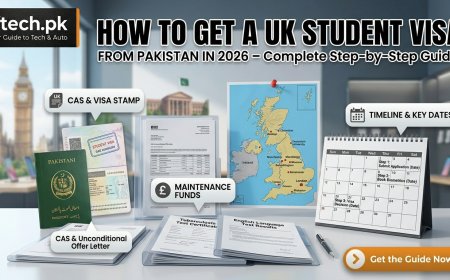
Once you have a conditional or unconditional offer, visa preparation begins immediately — not after you've accepted the offer and paid the deposit. Visa processing for Pakistani passports takes longer than for most nationalities: budget 8–12 weeks for UK, 6–10 weeks for Canada, 6–8 weeks for Australia, 4–8 weeks for Germany and Turkey.
Start gathering your financial documents as soon as you apply to universities — don't wait for the offer. Bank statements need to show a consistent balance over 3–6 months, not a lump sum deposited right before your visa interview.
Pre-Departure: Housing, Finances & Orientation
Visa in hand, three things need to happen simultaneously: secure accommodation, arrange your first month's finances, and complete your university's pre-arrival checklist. University accommodation fills up within days of offer acceptance — apply the same day you accept your place, not the following week.
Carry the equivalent of at least 2 months' living expenses in accessible funds when you travel. Airport immigration officers occasionally ask international students to demonstrate financial access. A bank card linked to a zero-fee international account (Wise or equivalent) is worth setting up before you leave.
2026–27 Admission Deadlines by Country: Don't Miss These
| Country | Intake | Application Opens | Typical Deadline | Status (March 2026) |
|---|---|---|---|---|
| 🇬🇧 UK (UCAS — Undergrad) | Sep 2026 | Sep 2025 | Jan 29, 2026 (equal consideration) | ⚠️ Passed — clearing available |
| 🇬🇧 UK (Postgrad) | Sep 2026 | Oct 2025 | Apr–Jun 2026 (varies by uni) | ✅ Open now |
| 🇨🇦 Canada (Undergrad) | Sep 2026 | Sep 2025 | Jan–Mar 2026 | ⚠️ Closing / closed at many |
| 🇨🇦 Canada (Postgrad) | Sep 2026 | Oct 2025 | Jan–Apr 2026 | ✅ Some still open |
| 🇩🇪 Germany (Undergrad/Postgrad) | Oct 2026 | Dec 2025 | May–Jul 2026 | ✅ Open — good timing |
| 🇦🇺 Australia | Feb 2027 | Mar 2026 | Sep–Oct 2026 | ✅ Early stage — start now |
| 🇹🇷 Turkey (Türkiye Bursları) | Oct 2026 | Jan 2026 | Feb 20, 2026 | ❌ Closed — plan for 2027 |
| 🇹🇷 Turkey (Direct Apply) | Oct 2026 | Mar 2026 | Jun–Jul 2026 | ✅ Open now |
How to Write an SOP That Actually Works for Pakistani Applicants
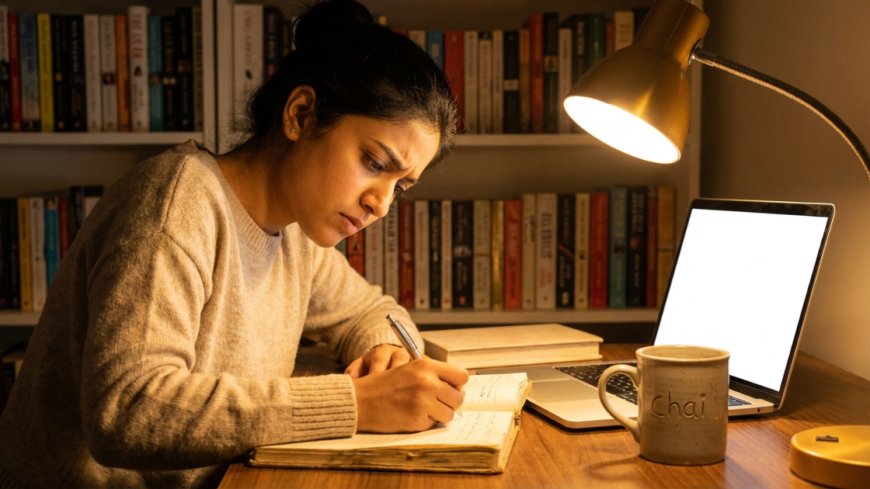
The Statement of Purpose is the one document where a Pakistani student with a 3.2 GPA can outperform a student with a 3.8 — and vice versa. Admissions committees use it to answer one question: does this person know why they're here and what they'll do with it?
Pakistani students consistently lose points on SOPs for three reasons: they start with a cliché, they list achievements already visible in transcripts, and they end with vague plans for "contributing to Pakistan's development." An SOP is not a CV narrated in paragraphs. Here's the structure that works:
SOP Structure — 650 to 1,000 Words (Unless Specified Otherwise)
Complete Document Checklist for Pakistani Applicants (2026)
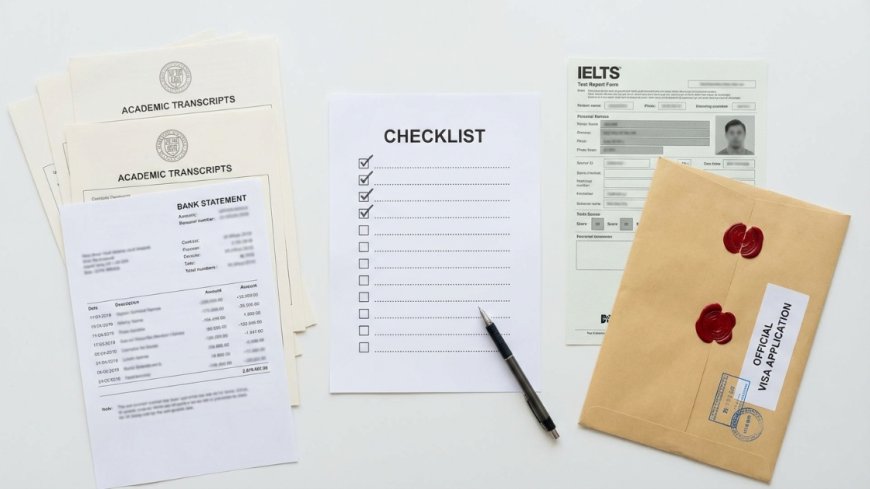
Missing or incorrectly attested documents are the leading cause of visa rejections for Pakistani students — not visa officer bias, not financial insufficiency. Use this checklist for every application.
Academic Documents
- Matric certificate + detailed marks sheet (attested by IBCC if applying to foreign institution)
- Intermediate / FSc / A-Level certificate + detailed marks sheet
- Bachelor's degree + transcript (HEC attested, then Ministry of Foreign Affairs attested)
- Official medium of instruction certificate from your university (required by most European institutions)
- Academic reference letters — minimum 2 (on university letterhead, signed, stamped, and ideally emailed directly by the referee)
English Language
- IELTS / TOEFL / PTE Academic result (issued within 2 years of application date)
- Confirm test centre is recognised by the specific institution and VISA authority
Financial Documents (for Visa)
- Bank statements for the past 6 months (sponsor's account — parent or self)
- Bank balance certificate issued within 30 days of visa application
- Proof of income source: salary slips, business registration, property documents, or pension certificate
- If family-sponsored: sponsor's CNIC, relationship proof, and a signed sponsorship letter
- Tax returns (FBR) for last 2–3 years (increasingly required by UK, Canada, and Australia)
Visa Application Essentials
- Valid passport (minimum 18 months validity from intended departure date)
- University acceptance / offer letter (conditional or unconditional)
- Statement of Purpose (SOP) or Personal Statement
- CV / résumé
- Accommodation proof (university housing confirmation or private tenancy contract)
- Health insurance (required for Germany, Turkey; strongly recommended for all)
- Biometric enrolment (UK, Canada, Australia — check current requirements)
- Visa fee receipt
What a Successful Application Actually Looks Like: Fatima's Timeline
Fatima Malik from Faisalabad was admitted to a master's programme in Environmental Engineering at RWTH Aachen for October 2025 intake. She shared her full timeline publicly in a Facebook study abroad group that now has 180,000+ Pakistani members.
She sat IELTS in January 2024, scoring 7.0. She started her SOP in March 2024, went through four full rewrites, and had it reviewed by a faculty member at her undergraduate university — not a consultancy. She applied to nine universities between April and June 2024, received four offers, and accepted RWTH in August 2024. Her visa application went in September 2024 and was approved in 5 weeks. She arrived in Aachen in September 2024 for the mandatory German language preparatory course.
Total consultancy fees paid: PKR 0. Total application fees paid: approximately PKR 95,000 across nine applications. She is currently working as a Hiwi at €13/hour.
The lesson isn't that consultancies are useless — some provide genuine value, particularly for document attestation logistics. The lesson is that Fatima's success came from starting 22 months before her intake and doing the substantive work herself.
Why This Matters: The Cost of Getting It Wrong
A failed study abroad attempt from Pakistan isn't just an inconvenience. For most families, it represents a financial loss of PKR 200,000–500,000 in application fees, test fees, and attestation costs — plus the opportunity cost of a year spent waiting for the next intake. For students who took a study loan, a visa rejection can create immediate financial pressure on the entire household.
The good news: the process is entirely learnable. Every step in this guide is something a motivated student can do without paid help. Attestation logistics are tedious but not complex. SOPs require effort, not expertise. IELTS is a testable skill. The timeline is the hardest part — and now you have it.
Pakistan's HEC overseas scholarship listings, UCAS application portal, and Germany's uni-assist centralised application system are all free, government-run, and designed to be accessible. [Link: suggested anchor "part time jobs for Pakistani students abroad" → How Pakistani students earn while studying in Europe and Canada 2026]
The Bottom Line: Start Earlier Than You Think You Need To
If you take one thing from this guide: the study abroad application process from Pakistan is not a 3-month task. It is a 12–18 month process that rewards students who start early and punishes those who rush.
Right now, in March 2026, the best available windows are Germany's October 2026 intake (deadline May–July), UK postgraduate September 2026 (still open at many institutions), and Australia's February 2027 intake. If none of those work for your timeline, use the next 12 months to build your application properly for September 2027 — and start with IELTS first.
The counterintuitive truth about studying abroad from Pakistan: the students who succeed are rarely the ones with the highest grades. They're the ones who understood the process earliest and gave themselves room to correct mistakes. Build the room.
What's Your Reaction?
 Like
0
Like
0
 Dislike
0
Dislike
0
 Love
0
Love
0
 Funny
0
Funny
0
 Angry
0
Angry
0
 Sad
0
Sad
0
 Wow
0
Wow
0